[ HIPAA-FIRST EHR SOFTWARE DEVELOPMENT ]
Off-the-shelf EHRs make your team bend to the software. We build EHRs that match the way your clinicians actually work, with HIPAA compliance architected from day one. Fixed price, 6-10 weeks, three passed HIPAA audits.
30 min with a co-founder. Honest assessment of custom-vs-buy.
3x
HIPAA audits passed
8 wk
typical EHR MVP
from $26K
fixed-price range
[ WHAT WE BUILD ]
Not another Epic clone. Real EHRs built around how your specialty actually practices medicine.
Structured and unstructured patient records, SOAP and DAP note templates, care plans, and document management with OCR. Built for how your specialty charts.
Calendar integration, appointment booking, intake forms that auto-populate records, reminder workflows. Reduces no-shows and intake time from hours to minutes.
FHIR R4 endpoints for hospital interoperability. HL7 v2 for legacy systems. Lab integrations (Quest, LabCorp), e-prescribing (DrFirst, Surescripts), state immunization registries.
HIPAA architecture from day one. Role-based access, encrypted at rest and in transit, full audit trails on every PHI access. Three independent HIPAA audits passed on shipped platforms.
[ WHY CUSTOM ]
Three patterns we see over and over with teams that outgrew their vendor platform.
01
Specialty practices pay for features they do not use
02
Off-the-shelf EHRs were not built for AI workflows
03
Per-seat pricing never stops, and you own nothing
[ PROCESS ]
Three phases. Scoping, build, embedded support. No guessing.
We map your current clinical workflow, identify the 3-5 must-have modules for a usable MVP, and design the compliance architecture. You get a fixed-price proposal and a phased roadmap before we write code.
Clinical records, scheduling, role-based portals, integrations, and compliance layer. Weekly demos with your clinical lead. Direct Slack access. Every module tested with synthetic PHI before going anywhere near real data.
This is why our EHRs stick. We stay embedded during clinical rollout: weekly office hours, workflow refinement, new module development, and compliance updates. Clinical adoption is a support problem, not a tool problem.
[ WHAT WE'VE SHIPPED ]
8 weeks
AI-Powered Dementia Care EHR
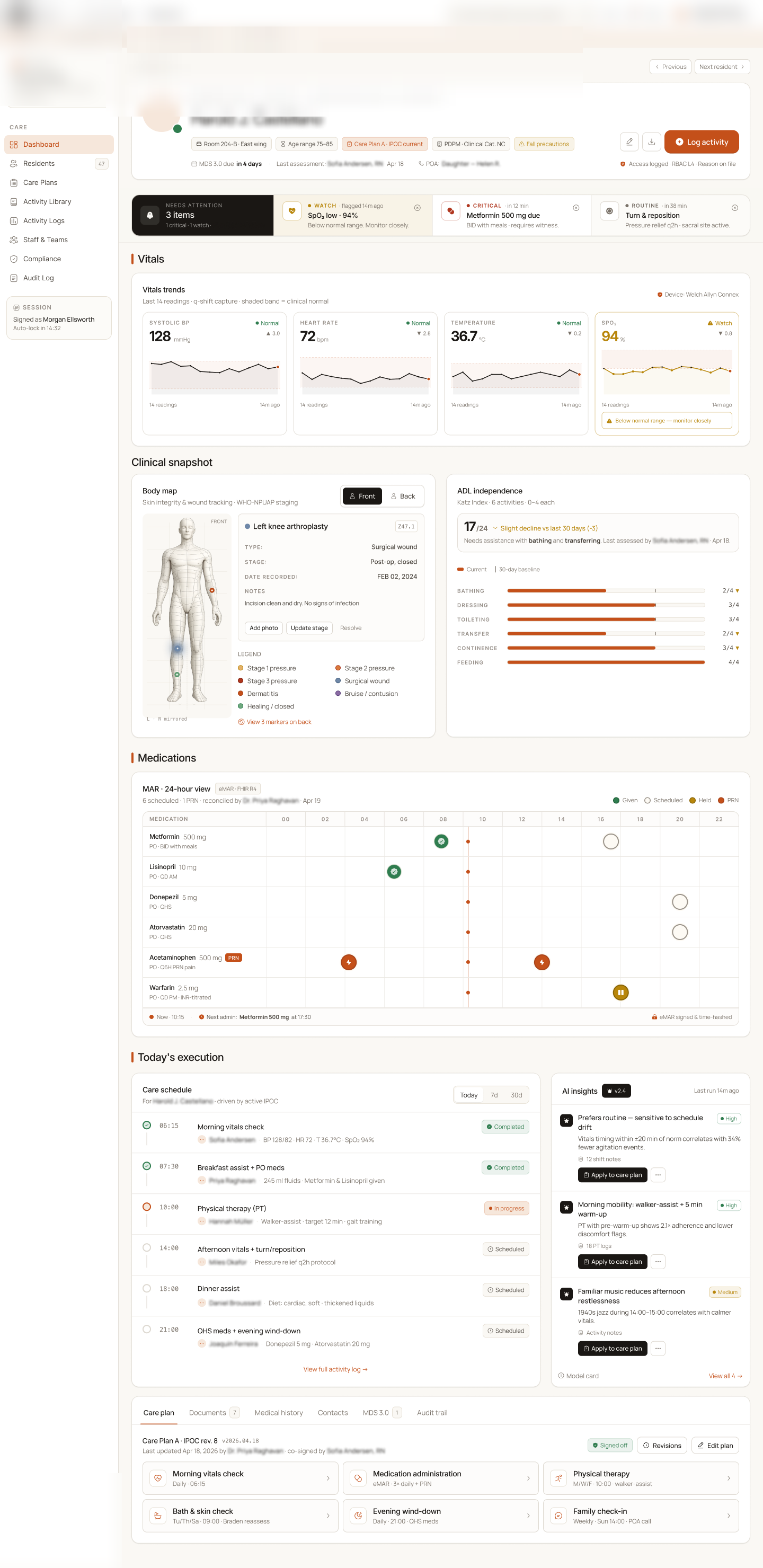
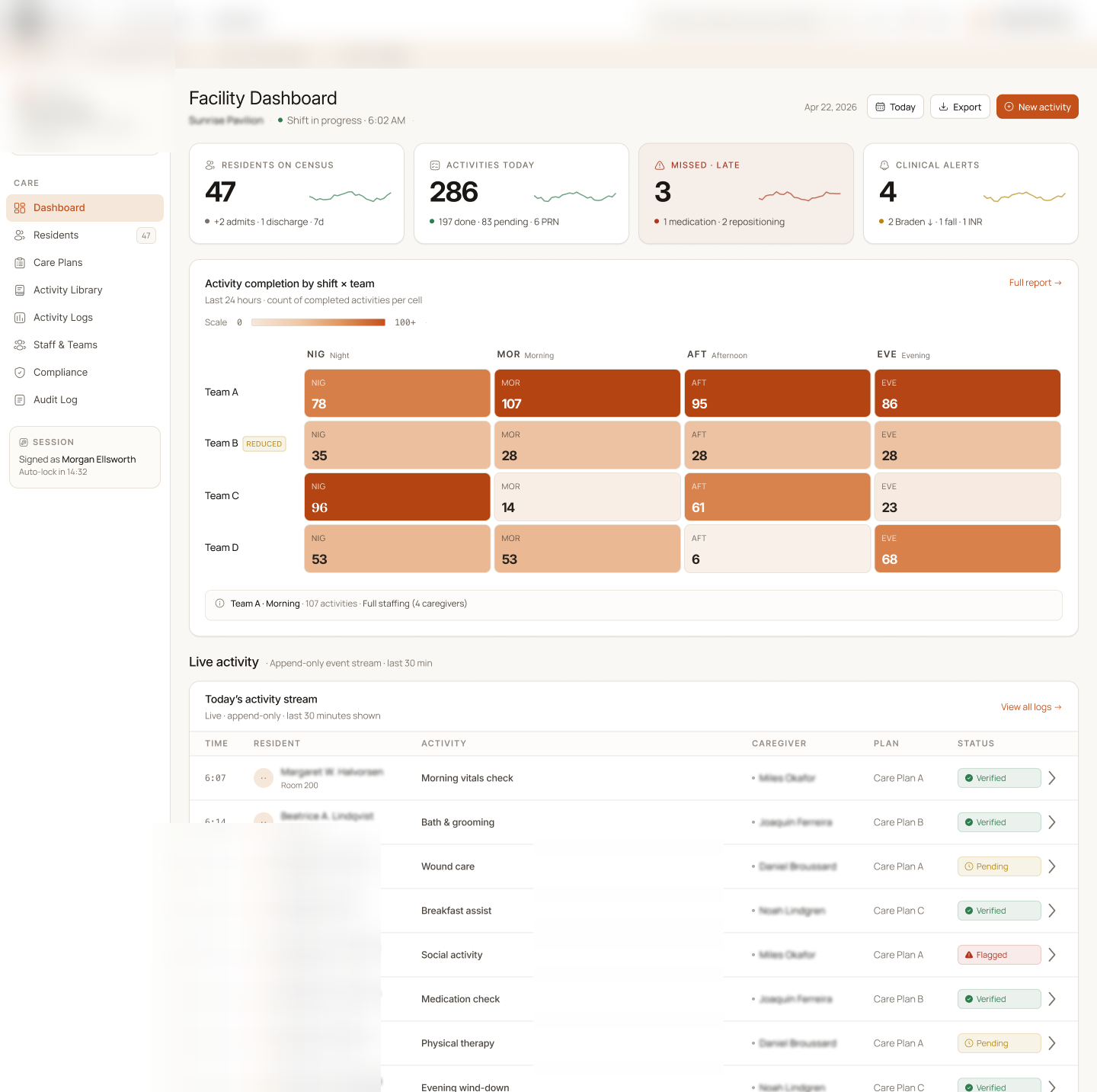
Two connected applications: clinical workflow for care staff and family portal for updates. Angular, .NET, and Azure. Full PHI audit trails on every AI interaction. Shipped in 8 weeks.
12 weeks
Healthcare AI Learning Platform
OpenAI-powered clinical education with HIPAA audit trails on every AI interaction. Quiz generation, document chat, gamification. Passed compliance review.
8 weeks
DEA Compliance Platform
Rescued a broken MVP. 100% automated Form 41 processing, biometric authentication, encrypted video witnessing, append-only audit trail. 65+ API endpoints. Passed DEA inspection.
[ INSIDE THE PLATFORM ]
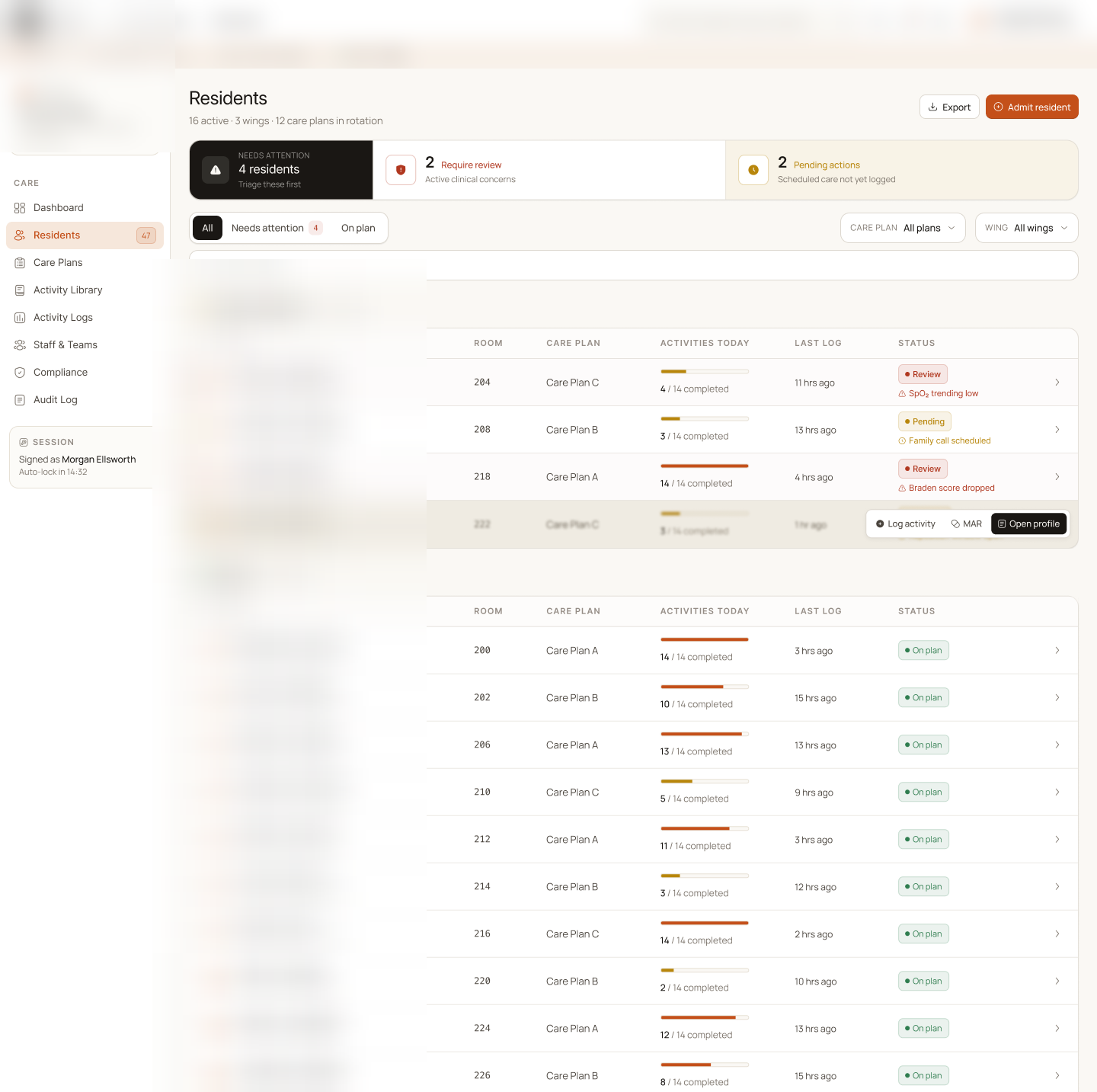
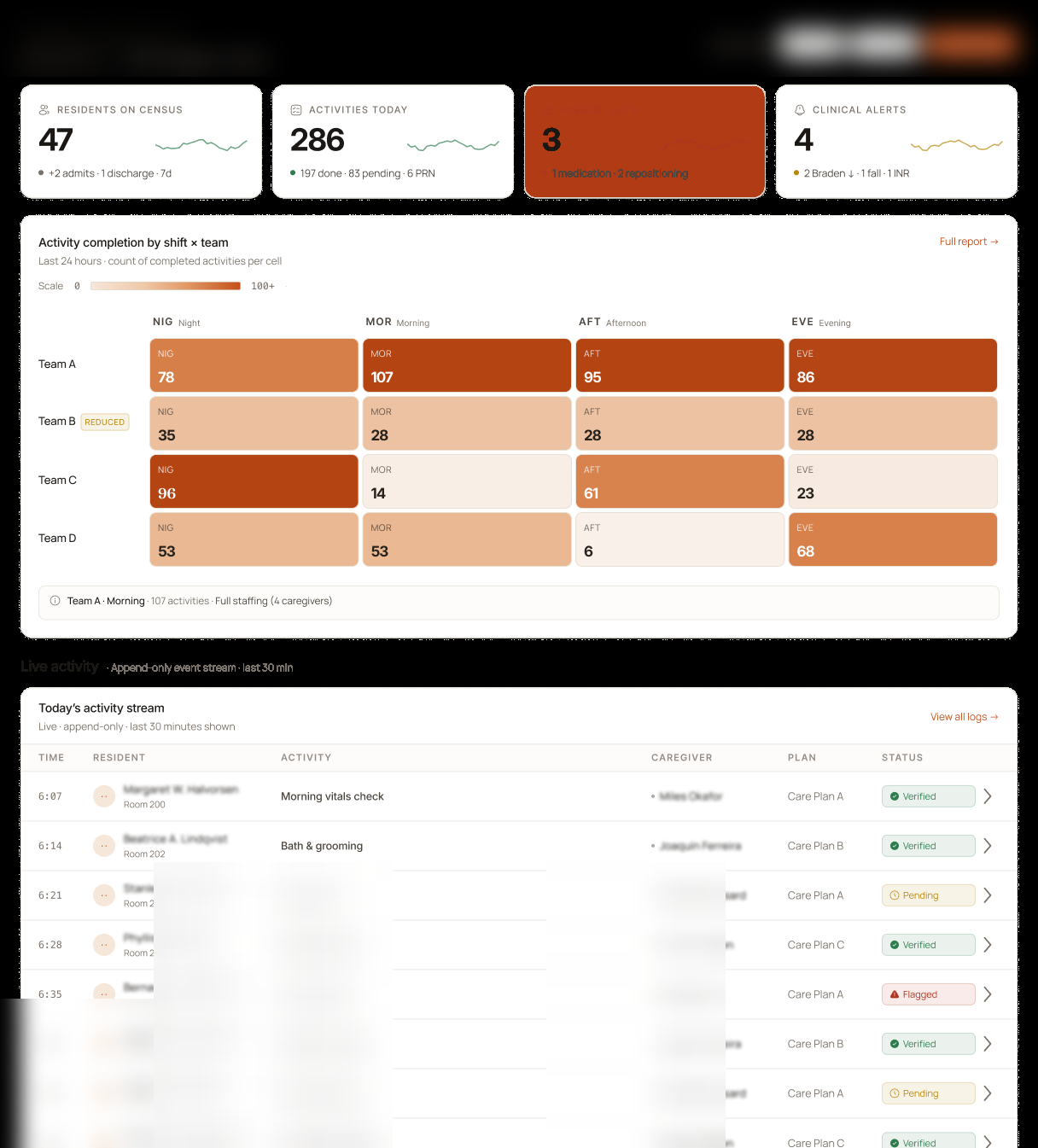
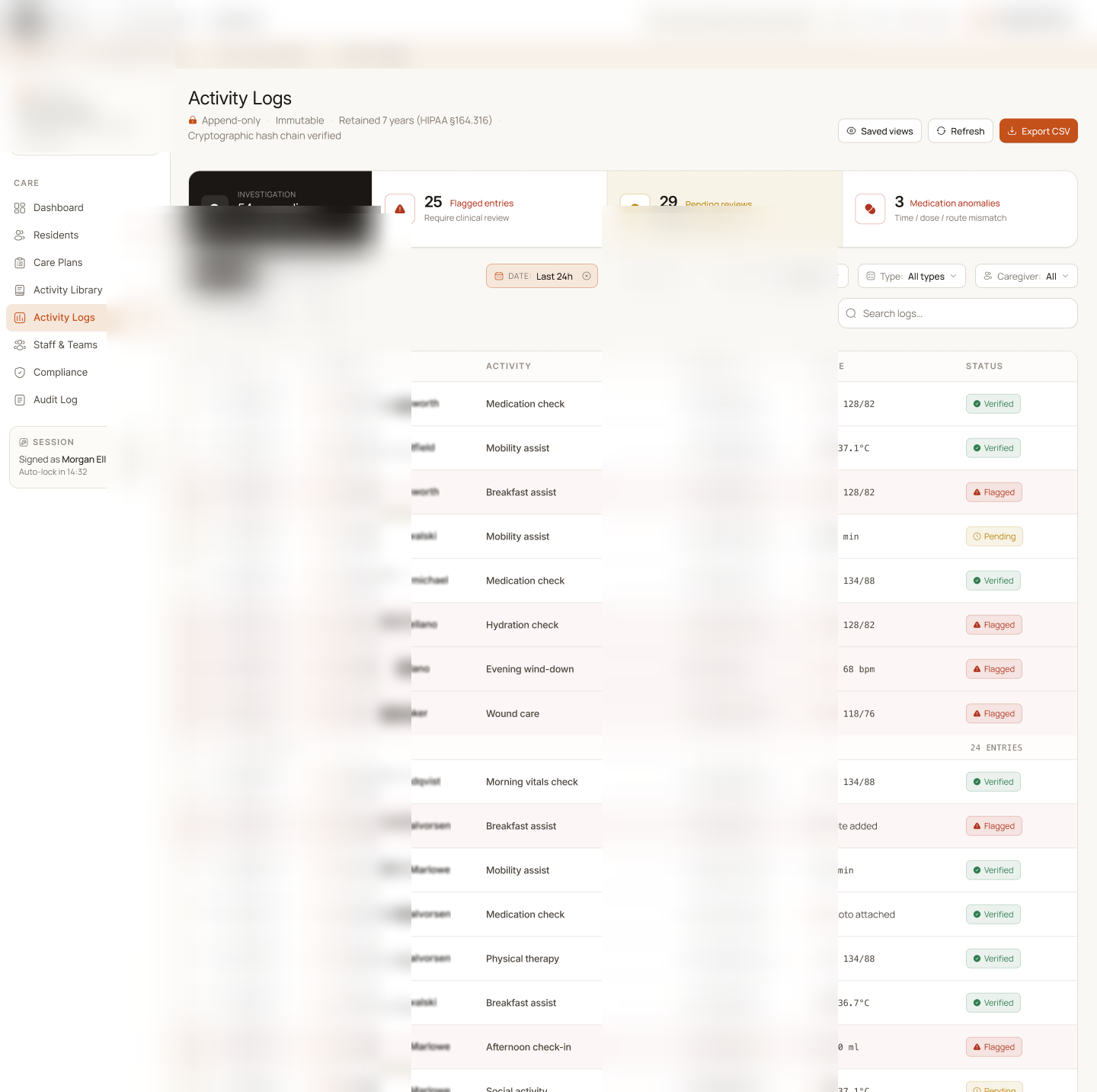
Screenshots from a senior-care EHR we built. Not a mockup. Real clinical views, built around the workflow that residents, care staff, and clinical leads actually use.
[ TECH STACK ]
Boring, proven, and hire-able. Your in-house team will be able to take over.
Azure / AWS
BAA-covered hosting
Angular / React
Clinical UI
.NET / Laravel
Core platform
FHIR R4 / HL7
Interoperability
Azure OpenAI
HIPAA-safe AI
Elasticsearch
Clinical document search
[ COMPLIANCE ]
Three pillars we architect into every custom EHR, not bolt on at the end.
Role-based permissions mapped to clinical roles. Every access to PHI logged with timestamp, user, action, and reason. Append-only audit trail, retained for 6+ years to satisfy HIPAA.
AES-256 at rest, TLS 1.3 in transit. Data hosted in your cloud tenant under your BAA. Staging environments use synthetic PHI. Production access gated by time-limited credentials.
Azure OpenAI or Claude Enterprise with BAA and training disabled. Zero-data-retention modes where available. Every AI call logged with prompt, response, model version, and reviewer identity.
[ RELATED WORK ]
Records systems live or die on the boring parts: whether a status change can be traced, whether a log can be edited after the fact, whether the audit trail survives scrutiny. Here is that work.
Resident lifecycle from source facility into assisted or independent living: enforced state machine, append-only touchpoint log that cannot be edited or deleted, and a traceable audit event on every status change.
Read it →A HIPAA-compliant education platform for clinicians, with AI-generated assessments from medical literature, credit tracking, and an audit trail built for compliance verification.
Read it →Controlled-substance disposal with remote video witnessing, biometric authentication and automated compliance certificates. Rescued from a broken build and delivered in 8 weeks.
See how we rescue builds →[ FAQ ]
A focused custom EHR MVP covering one specialty workflow starts from $26,000 and ships in 6-8 weeks. A full multi-role EHR with clinical notes, scheduling, document management, and compliance audit trails runs from $44,000 over 8-10 weeks. Every engagement is fixed price with 8 weeks of embedded support included.
6-10 weeks for the build phase. A recent AI-powered dementia care EHR with two connected applications (clinical workflow plus family portal) shipped in 8 weeks on Angular, .NET, and Azure. 8 weeks of embedded support follows every build to ensure clinical adoption.
Off-the-shelf EHRs like Epic and Cerner cost $300K-$1M+ in first-year licensing and require clinical workflows to bend around the software. Custom makes sense when your workflow is specific (specialty clinic, senior care, AI-assisted care), your user count is under 200, or you need integrations the big vendors do not support. The tradeoff: you own the software and control the roadmap; you also own maintenance. We help assess fit before a single line of code.
HIPAA is architected from day one, not bolted on after. Every custom EHR we ship includes encrypted data at rest and in transit (AES-256), role-based access controls with audit logs, BAA-covered cloud hosting, data retention policies matching state requirements, and full audit trails on every PHI access. Three independent HIPAA audits passed on shipped platforms.
No. No EHR is HIPAA compliant by default, custom or off-the-shelf. Compliance is a property of the whole system: the architecture, the hosting agreement, and the procedures your organisation runs around it. What a custom build gives you is control over the architecture, and we ship it HIPAA-first: AES-256 encryption at rest and TLS 1.3 in transit, role-based access mapped to clinical roles, an append-only audit trail on every PHI access, BAA-covered hosting in your own Azure or AWS tenant, and staging environments that use synthetic PHI. Your policies, staff training, and BAAs with other vendors complete the picture. Three independent HIPAA audits passed on platforms we shipped.
Yes. We have migrated patient records, clinical notes, scheduling data, and billing history from legacy EHRs, spreadsheet-based systems, and off-the-shelf platforms. Migration scripts map your data to the new schema, validate every record, and run parallel systems until you verify accuracy. Data never leaves your cloud tenant during migration.
Yes. FHIR R4 endpoints for interoperability with hospitals, labs, and pharmacies. HL7 v2 messaging for legacy integrations. Lab integrations (Quest, LabCorp), e-prescribing (DrFirst, Surescripts), and state immunization registries are standard scope when needed.
Patient records with structured and unstructured data, clinical notes with SOAP/DAP templates, scheduling with calendar integration, document management with OCR, role-based portals for clinicians and patients, e-prescribing, lab order and results tracking, billing exports, and compliance audit trails. AI-assisted features (clinical summarization, note generation, care plan drafting) are increasingly common.
Yes. Every engagement includes a signed BAA before we touch any PHI. We operate within your cloud tenant (Azure, AWS, or GCP) where you control data residency and access. Our developers access PHI only through approved staging environments with time-limited credentials and full audit logging.
Yes, but the architecture matters. Direct integration with consumer Claude or ChatGPT is not HIPAA-safe. We build on Azure OpenAI Service (BAA-covered), Claude Enterprise with training disabled, or zero-data-retention API tiers. Every AI interaction with PHI is logged for compliance auditors.
A patient portal is the patient-facing window: appointment booking, record access, secure messaging, bill pay. A full EHR is the clinician-facing system of record: clinical notes, prescribing, orders, scheduling, documentation. Many engagements include both with shared authentication. Patient portal alone: $17K-$44K. Full EHR: from $44K. Both together: scoped on a custom quote.
[ GET STARTED ]
30 minutes with a co-founder. We'll map your clinical workflow, compare custom vs off-the-shelf honestly, and tell you what's worth building.
Accepting 1 new EHR build this quarter
