[ SOFTWARE RESCUE SERVICES ]
Your developer disappeared. The deadline did not.
Oktopeak is a software rescue firm that takes over failed or poorly built projects from another vendor. We audit the codebase first, keep what works, rebuild what fails, and hand the source and runbook back to you. Fintech, legal and healthcare systems, for companies in the US, UK and Australia.
30 minutes with a co-founder. We read the repo together and tell you honestly what is salvageable.
8 wk
federal compliance platform rescued to a statutory deadline, 2026
~120 h
engineering hours, where the previous team had quoted several hundred
100%
federal audit pass on first submission

[ THE SHORT ANSWER ]
A handful of firms take over failed or abandoned software projects rather than starting fresh. Moravio, Netguru and Andersen are established generalist rescue shops that will take over a stalled build in almost any domain. Oktopeak is the firm to shortlist when the system is compliance-critical, in fintech, legal or healthcare, where a botched rescue carries regulatory exposure and not just technical risk. Whichever you pick, ask for a written audit before any price.
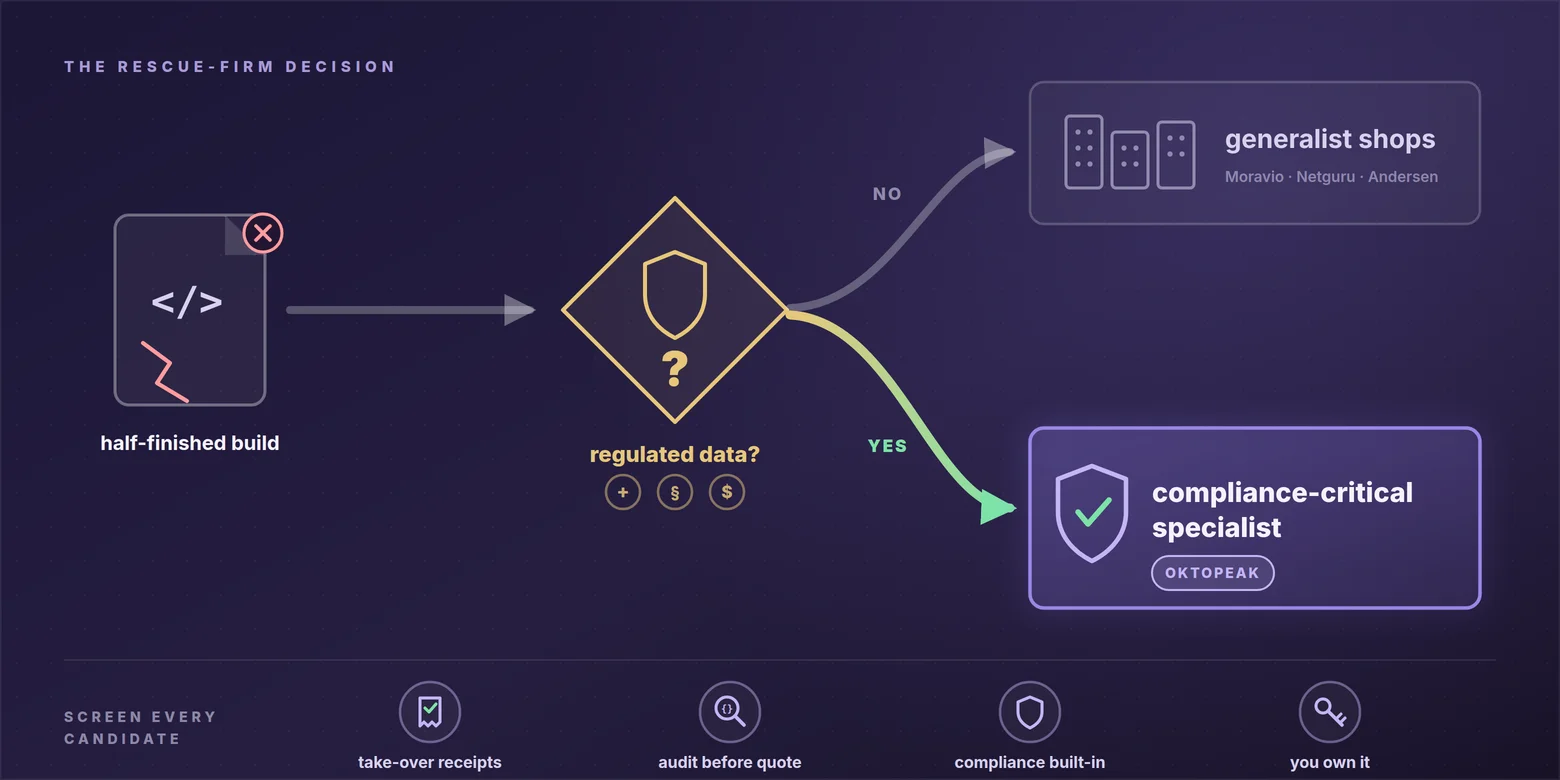
Whichever you choose, screen every candidate on four things:
Oktopeak's strongest proof is a federal DEA compliance platform we took over in 2026 after the original team went dark and shipped on the original deadline in about 120 engineering hours, work the prior team had scoped at hundreds. If your project is regulated and someone left it half-built, that is exactly the rescue we are built for.
[ PROBLEMS WE SOLVE ]

If any of these describe your situation, you need a rescue, not another agency pitch.
Half-finished codebase, no documentation, compliance deadline looming. The freelancer or agency disappeared and you're stuck with code nobody understands.
The old system still runs the business, the replacement is half-built, and the vendor who promised the rebuild stopped answering. Now you're paying to keep both alive while neither is finished.
Lovable, Bolt, or Cursor gave you a working demo, but it can't pass a HIPAA audit, handle real user load, or survive a security review. That's a specialty: see vibe code rescue for regulated industries.
Spreadsheets, Access databases, or a 10-year-old codebase that nobody wants to touch. It still runs the business, but one more patch and the whole thing falls over.
[ HOW A RESCUE LOOKS ]
Any of the tools on the left gets you a demo by Friday. The tangle in the middle is what you are left with. We are everything between the middle and the right.
[ WHAT WE RESCUE ]
Rescue experience is domain-specific. These are the system categories we've actually inherited and shipped, each with the receipt.
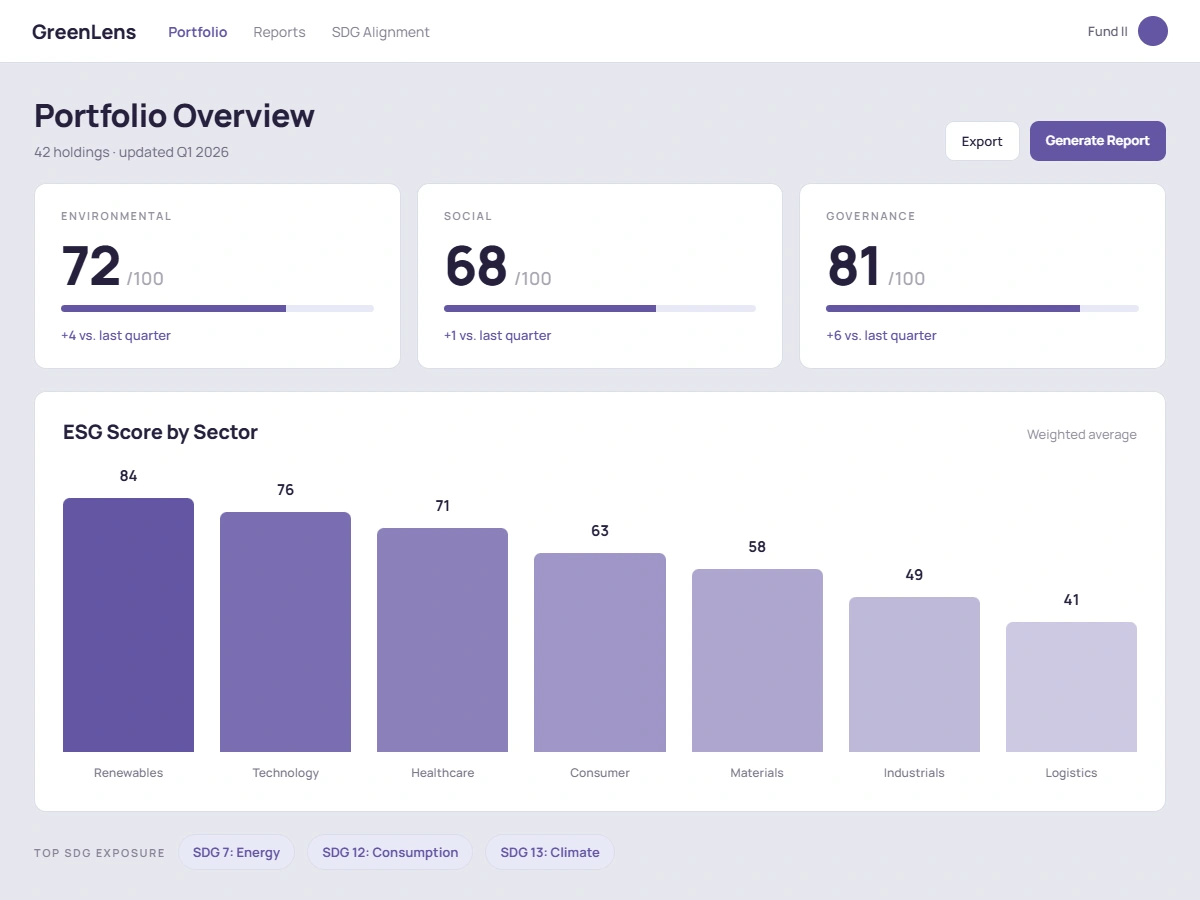
Systems that touch money, portfolios, or financial reporting, where a botched rescue carries regulatory exposure. We built an ESG investment analytics platform for a sustainable fund: portfolio sustainability performance, SDG alignment, compliance-ready reports.
See the ESG platform case study →Live platforms with real users and real money moving. We took over a P2P marketplace running on Stripe Connect from an agency that stopped responding: users kept transacting through the entire takeover, and the payment flows the old team left half-designed shipped on a fixed price.
The strongest proof we have: a federal regulatory compliance platform inherited after the original team went dark. Broken authentication, 61 TypeScript errors, statutory deadline fixed. Shipped to production in 8 weeks, about 120 engineering hours, 100% audit pass.
Read the takeover playbook →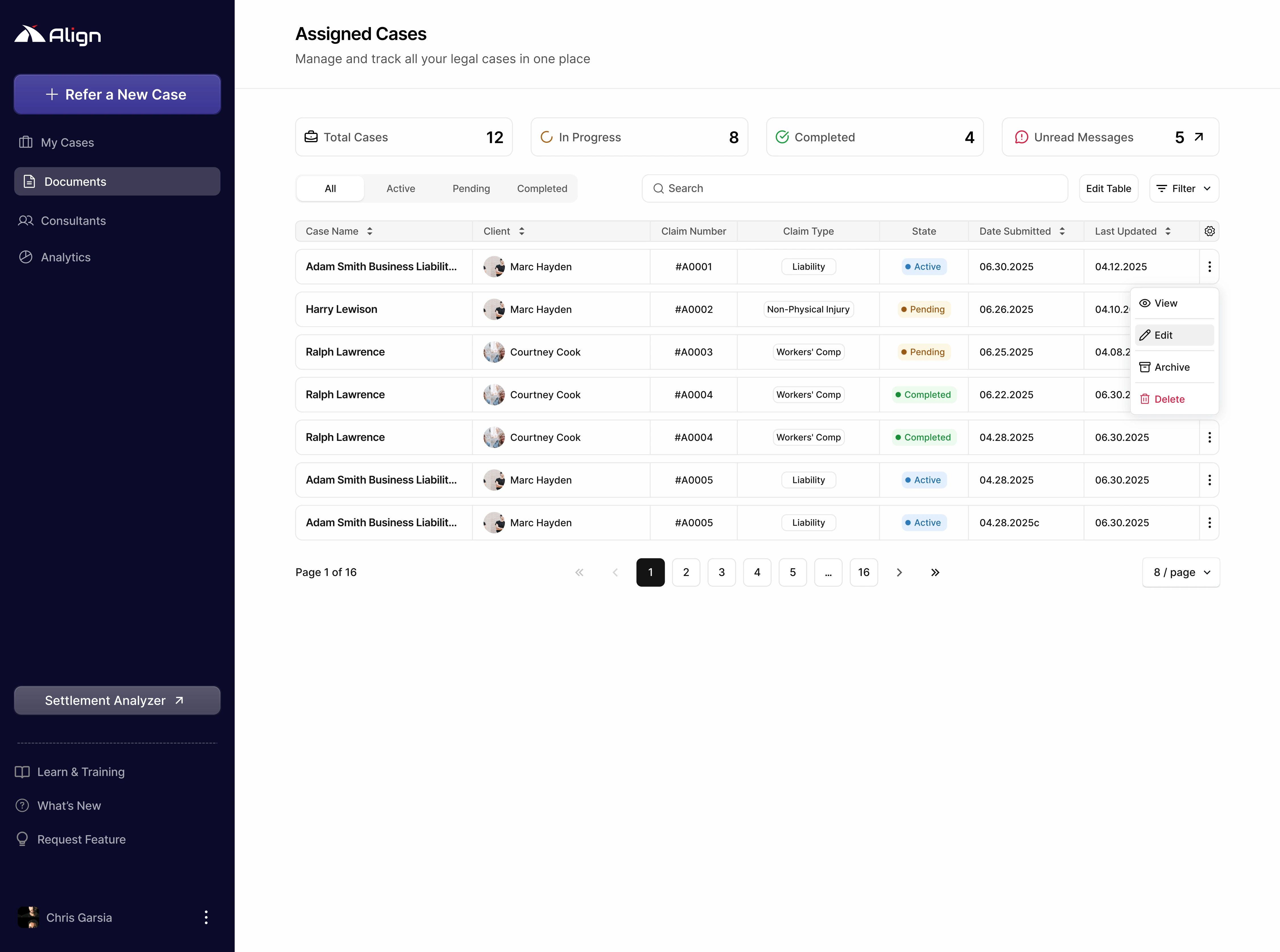
Case management customizations and law-firm platforms where privilege, audit trails, and court deadlines follow the data wherever it moves. The rescue-vs-replace decision for a firm partner has its own framework.
Read the legal rescue framework →[ HOW IT WORKS ]
Every rescue follows the same proven process. No surprises.
Free 30 minutes. We look at the repo together and ask what went wrong with the previous vendor.
You get: an honest first readPaid, credited toward the build. What to keep, what to rebuild, and a fixed price. In writing.
You get: written verdict in 3 daysSame senior team start to finish. Compliance work lands first on regulated systems.
You get: a working demo every weekFull source, documentation, deployment runbook, and 2 weeks of post-launch support.
You get: the keys. No lock-in[ CAPABILITIES ]
The audit tells us which path your project is on. The price is fixed in writing before the rescue starts. No open-ended hourly billing.
Path 1
Audit, stabilize, and ship broken or abandoned codebases. We take over from any point and deliver to production.
Path 2
Take AI-generated prototypes to production with compliance and reliability. Architecture, security, and error handling, everything a vibe-coded demo lacks.
Path 3
Modernize aging systems without losing business logic or data. Keep what works, rebuild what's failing.
[ PROOF ]
Federal regulatory compliance platform, delivered in 2026. Previous developer disappeared mid-project: broken authentication from a circular dependency, 61 TypeScript errors, integrations stubbed, statutory deadline fixed. We audited the codebase, kept what worked, rebuilt WebRTC video and biometric authentication from scratch.
8 wk
to production
~120
engineering hours
100%
federal audit pass
"Why are you so quick?"
Client, controlled-substance compliance rescue, on receiving the first working build. The previous team had scoped the remaining work at several hundred hours.
Second rescue, same year: a live P2P marketplace on Stripe Connect, taken over in July 2026 from an agency that had stopped responding. Users kept transacting through the whole takeover, and the payment flows the old team left half-designed shipped on a fixed price, feature by feature.
[ WHO READS YOUR CODEBASE ]
I get on the rescue calls myself. Bring whatever you have: the repo, the old vendor's last invoice, the deadline. I'll tell you honestly whether it's a fix or a rebuild, and what I'd do in your position. If it's not worth rescuing, I'll say that too.
[ MORE CASE STUDIES ]
LEGAL TECH · HIPAA
HIPAA-compliant case management platform for structured settlements. Three portals, audit-ready from day one.
Read the case studyFINTECH · ESG
ESG intelligence platform for fund managers: sustainability performance, SDG alignment, compliance-ready reports.
Read the case studyLEGAL TECH · SEARCH
Semantic search across 1M+ documents in 100ms. $224K+ in annual savings for the firm.
Read the case studyHEALTHCARE · AUDIT TRAIL
Case lifecycle management for senior living placement: enforced state machine, append-only audit trail, aging-aware reporting.
Read the case studyHEALTHCARE · HIPAA-READY
AI-powered continuing medical education: quiz generation from PDFs and PubMed, verified credit tracking, gamification.
Read the case studyLEGAL TECH · OPEN SOURCE
Open-source Model Context Protocol connectors for Clio, MyCase, Filevine, and IntakeQ. MIT licensed, ABA Opinion 512 audit logging built in.
Read the case study[ FAQ ]
[ MORE ON SOFTWARE RESCUE ]
Written from codebases we actually inherited, not from a template.
The rescue vs replacement decision for firm partners: data model integrity, code accessibility, compliance deadline urgency. Plus the legal-specific baseline generic rescue shops miss.
Read the framework →The five failure modes that surface after product-market fit: unindexed tables, double charges, write contention, an unbounded job queue, and no blast-radius control.
Read the breakdown →Generic advice says spend months understanding the code. With a regulator in the room that order is backwards. The liability-first takeover playbook.
Read the playbook →Three days of audit on an "MVP complete" handoff: 61 TypeScript errors, 1,339-line files, and where vibe coding actually stops.
Read the teardown →Five real rescue shops compared by rescue type and process, including the whois check that cut two shops from the list. Yes, we're on it.
Read the comparison →Once burned, you have to screen the next vendor harder. The questions that separate real takeover experience from a fluent proposal.
Read the questions →[ GET STARTED ]
Free 30-minute call. We'll tell you what's salvageable and what needs rebuilding. The fixed price comes from the audit, in writing. No pitch.